Weekly Meal Prep for Beginners: A Simple System That Works

Chef Karim
CHEF
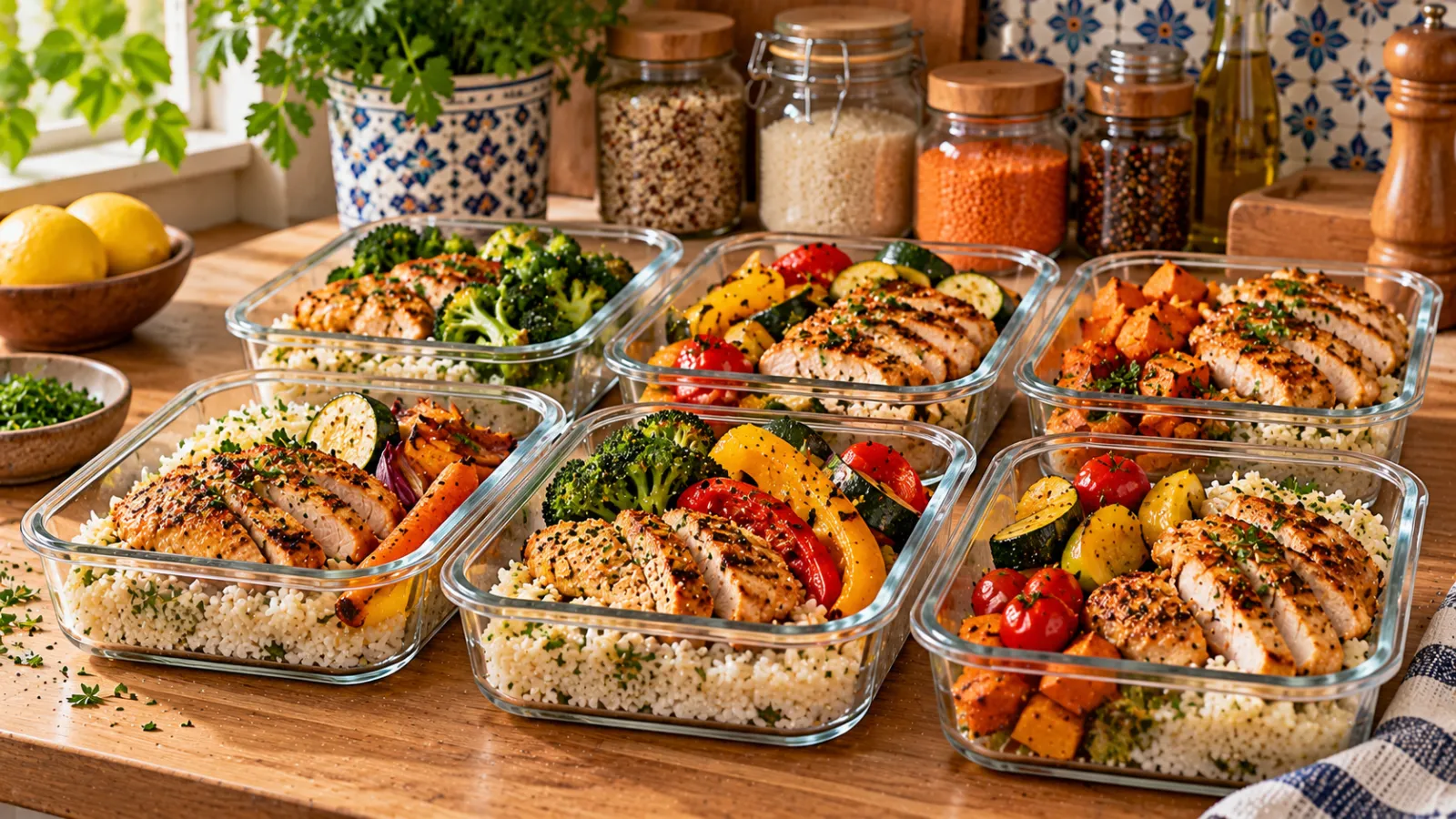
Meal prep has a reputation for rows of identical plastic boxes and joyless chicken and rice. It doesn't have to be like that. At its simplest, meal prep just means doing some of the week's cooking in advance, so weeknight dinners take minutes instead of an hour and lunch is something better than whatever is closest to hand.
The trick for beginners is to start small and build a system you can actually repeat. This guide walks you through planning, shopping, choosing between prepping components or full meals, picking containers, and a sample two-hour session you can copy this weekend. We also cover how long prepped food keeps, because a fridge full of food you're nervous to eat by Thursday isn't much help.
Start with a realistic plan
Before you buy anything, decide which meals you actually want help with. Most beginners do best prepping for three to four days, not seven. Cooked food has a limited fridge life, and enthusiasm for the same dish usually runs out before the week does.
Look at your calendar and ask a few questions:
- Which nights are busiest? Those are the ones prep should cover.
- Do you need lunches, dinners, breakfasts, or all three? Pick one or two to start.
- How many people are you feeding, and does anyone have strong dislikes?
- Which nights will you cook fresh, eat out, or eat leftovers?
Then choose two or three main recipes that share ingredients. If you're roasting a tray of peppers for a grain bowl, roast a second tray for a pasta bake. Overlap keeps the shopping list short and the prep session efficient.
Build a shopping list that matches the plan
Write your list by section of the store (produce, meat and fish, dairy, dry goods, frozen) so you're not doubling back. Before you go, check what you already have; half a bag of rice or a forgotten can of chickpeas can save you buying a duplicate.
Quantities are where beginners usually go wrong. As a rough guide for one adult portion, allow about 4–6 oz (115–170 g) of raw meat, fish or tofu; ½ cup (about 90–100 g) of dry rice or 2 oz (55–60 g) of dry pasta; and 1–2 cups (roughly 100–200 g) of vegetables. Multiply by the number of portions you need, and round up a little on vegetables, which shrink as they cook.
Components or full meals? Try both
There are two main styles of meal prep, and each suits different people.
Full meals
You cook complete dishes, such as a chili, a curry or a tray bake, and divide them into portions. This is the most convenient option: open the fridge, reheat and eat. The downsides are repetition and the fact that some dishes, especially anything crispy or already dressed, don't hold up well.
Components
You cook building blocks (a grain, a protein or two, roasted vegetables, a sauce) and assemble different meals through the week. Monday's rice and chicken become a burrito bowl; Wednesday's become fried rice. It takes a few minutes of assembly each day but gives far more variety.
A good beginner approach is a hybrid: one full meal that reheats well, such as a soup or stew, plus a handful of components for flexible lunches and dinners.
Choose containers that make life easier
- Glass containers with lids reheat well, don't stain, and let you see what's inside.
- Shallow containers cool food faster than deep ones, which matters for safety.
- A couple of sizes: roughly 2-cup (500 ml) for single portions and 4-cup (1 litre) for components.
- Small jars or pots for dressings and sauces, so they don't make everything soggy.
- Freezer-safe bags or containers for anything you want to keep longer than a few days.
Stackable, matching containers save more fridge space than you might expect. Keep a roll of masking tape and a marker nearby so you can label as you go.
A sample 2-hour prep session
Here's a plan for four days of lunches and dinners for one or two people. The key is to start whatever takes longest first and fill the gaps with chopping and sauces.
- 0:00 – Oven on, grains started. Heat the oven to 425°F (220°C). Rinse 1½ cups (about 280 g) of rice and start it on the stove or in a rice cooker.
- 0:10 – Vegetables in. Toss two trays of chopped vegetables (broccoli, peppers, carrots, sweet potato) with oil and salt. Roast for 25–35 minutes, turning halfway.
- 0:20 – Protein. Season about 1½ lb (680 g) of boneless chicken thighs and roast on another tray until they reach 165°F (74°C) in the thickest part, usually 20–25 minutes.
- 0:30 – A full meal on the stove. Start a pot of lentil soup or chili. It can simmer quietly for 40 minutes while you do everything else.
- 0:45 – Sauces and raw prep. Whisk a simple vinaigrette (3 parts oil to 1 part vinegar or lemon juice, plus a little mustard and salt) and a yogurt-herb sauce. Wash and dry salad leaves; slice cucumber and herbs.
- 1:00 – Eggs (optional). Boil six eggs for 10–11 minutes, then cool them in cold water for quick breakfasts and snacks.
- 1:15 – Cool everything. Spread rice, vegetables and chicken in shallow layers so steam can escape. Ladle the soup into shallow containers.
- 1:30 – Portion, label and refrigerate. Aim to have everything in the fridge well within two hours of it finishing cooking.
- 1:45 – Clean up. Wash the trays and pots while you're still in the zone.
That one session gives you a pot of soup, a base for bowls and wraps, salad fixings and ready-to-go eggs.
How long prepped food keeps
As a general rule, cooked food stored in a fridge at or below 40°F (4°C) is best eaten within 3–4 days. That's why a Sunday prep comfortably covers Monday to Wednesday or Thursday. For the end of the week, freeze some portions on prep day or plan a quick mid-week top-up.
- Soups, stews, chili and curries freeze well for 2–3 months for best quality.
- Cooked rice should be cooled quickly and refrigerated promptly, then reheated until steaming hot throughout. Many cooks freeze rice portions rather than keeping it all week.
- Washed salad leaves last longer with a paper towel in the container to absorb moisture.
- Cut raw carrots and peppers keep well for several days; cut avocado and apple do not.
Reheat leftovers until steaming hot all the way through, or 165°F (74°C) if you use a thermometer. When in doubt, throw it out.
Common mistakes
- Prepping too much. Start with three or four days and grow from there.
- Dressing salads in advance. Keep dressings separate until you eat.
- Packing hot food into deep containers. Cool it in shallow layers first.
- Underseasoning. Flavours dull in the fridge; a squeeze of lemon or pinch of salt at serving brings them back.
- Ignoring texture. Slightly undercook pasta and green vegetables that will be reheated later.
Meal prep gets faster every week as you learn which dishes you enjoy and how much you actually eat. Keep notes, rotate recipes in and out, and don't feel bad about a lazy week with just a pot of soup. If you end up with leftover components and no idea what to turn them into, ask the Smart Chef for ideas based on what's already in your fridge.
Reader Comments (0)
Have thoughts on this article?
Sign in to leave a comment or share your experience.
No comments yet
Be the first to share your thoughts on this article!