Reducing Food Waste at Home: Practical Habits That Add Up

Chef Karim
CHEF
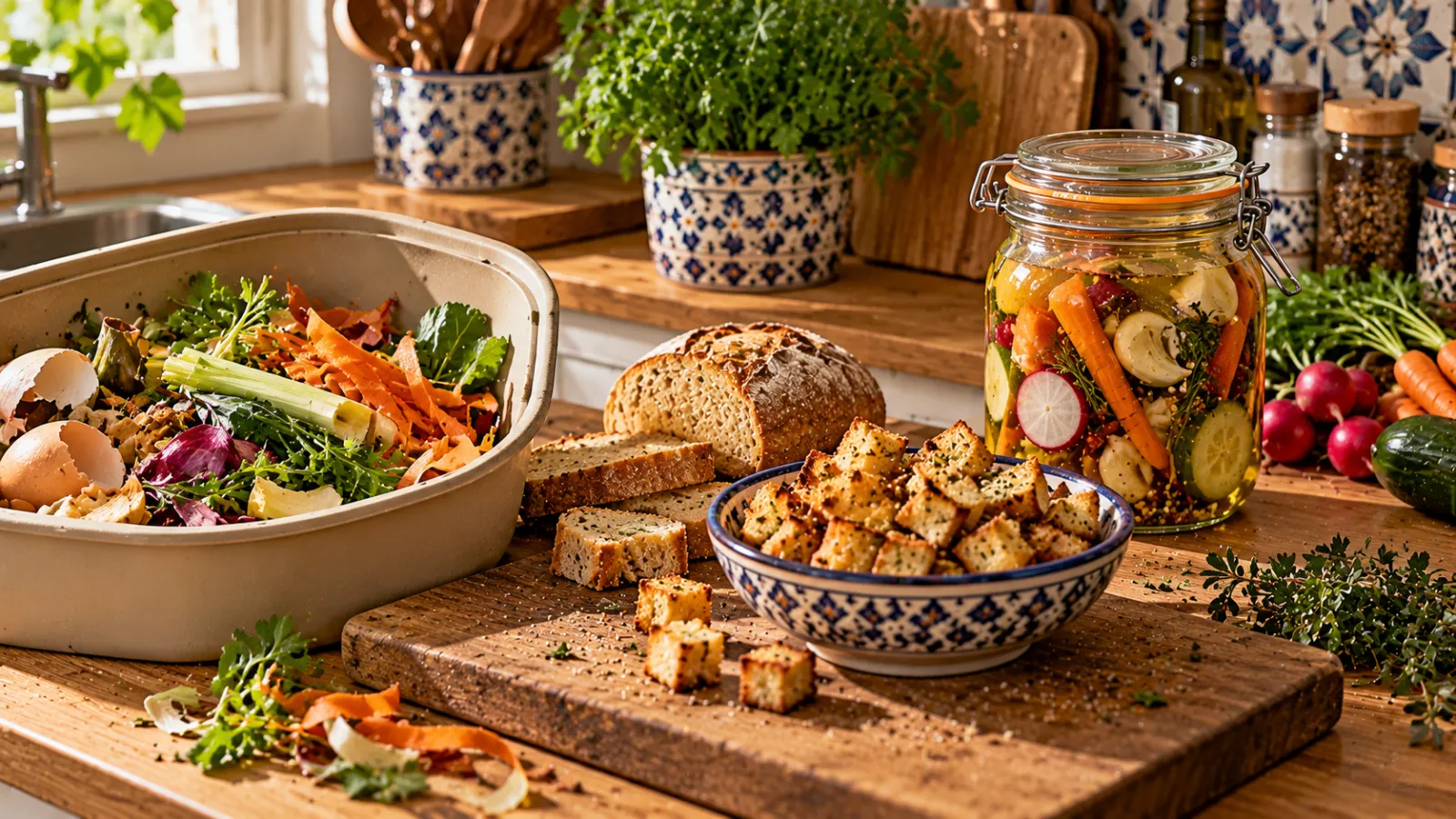
Most food waste at home doesn't come from one big mistake. It comes from small things: a bag of spinach that turns to slime at the back of the fridge, half a can of coconut milk forgotten in the door, bread that goes stale before anyone finishes it.
The good news is that small habits fix small problems, and they add up. Below are practical ways to organise your fridge, read date labels, use scraps, freeze smarter and turn leftovers into new meals, so you save money and get more out of every shop.
Shop and plan with waste in mind
Preventing waste starts before food even comes home.
- Do a quick fridge check before shopping, or snap a photo of the shelves if you tend to forget what's there.
- Plan meals that share ingredients, so a bunch of coriander (cilantro) or a tub of cream gets used across two or three dishes.
- Buy loose produce when you only need a couple of items rather than a multi-pack.
- Schedule a "use-it-up" night each week for odds and ends.
Organise the fridge: first in, first out
"First in, first out" is how professional kitchens keep stock moving, and it works just as well at home. When you unpack shopping, move older items to the front and put new ones behind them. That way the oldest food is always the first thing you see and reach for.
A few other fridge habits help:
- Keep it cold. Your fridge should be at or below 40°F (4°C), and your freezer at 0°F (−18°C). An inexpensive fridge thermometer lets you check.
- Create an "eat first" box or shelf for leftovers, opened jars and produce that needs using soon.
- Use clear containers so you can see what's inside without opening every lid.
- Store raw meat on the bottom shelf in a container, so it can't drip onto other food.
- Use the crisper drawers well. Leafy greens and herbs like humidity; wrap them loosely in a damp paper towel.
Some foods last longer outside the fridge. Keep potatoes, onions and garlic somewhere cool, dark and dry, and store potatoes and onions apart. Bananas, whole tomatoes and avocados ripen best at room temperature; once ripe, you can refrigerate tomatoes and avocados to slow them down.
Understand "best before" vs "use by"
Date labels cause a lot of unnecessary waste, mostly because people treat every date as a deadline. Wording varies by country, but the general idea is similar:
- "Use by" is about safety. It appears on perishable foods like fresh meat, fish, ready meals and some dairy. Don't eat food after its use-by date, even if it looks and smells fine, and follow storage instructions such as "keep refrigerated".
- "Best before" (or "best if used by") is about quality. Food is generally safe after this date if it has been stored correctly and the packaging is intact, though it may have lost some flavour or texture. You'll see it on dried pasta, canned goods, cereals and snacks.
- "Sell by", common in the US, is for the store's stock control rather than a safety date for you.
Your senses are useful for judging best-before foods, but they're not a safety test for use-by items or leftovers. Harmful bacteria don't always change how food looks or smells, so if you're unsure, don't risk it.
Use the scraps
Plenty of what ends up in the bin is perfectly good food.
- Vegetable trimmings: collect clean onion ends, carrot peels, celery leaves and herb stems in a freezer bag. When it's full, simmer with water for 45–60 minutes and strain for stock.
- Broccoli and cauliflower stalks: peel the tough outer layer, then slice and roast or stir-fry with the florets.
- Herb stems: soft parsley and coriander stems are full of flavour; chop them finely into sauces, salsas and curries.
- Stale bread: blitz into breadcrumbs, tear into croutons, or use in bread pudding or French toast.
- Parmesan rinds: drop into soups or tomato sauces while they simmer, then remove.
- Overripe bananas: peel, freeze and use later in banana bread or smoothies.
Freeze smarter
Your freezer is the most useful tool you have against waste. Food kept at 0°F (−18°C) stays safe, but its quality slowly declines, so aim to use most items within a few months.
- Freeze early. Freeze food while it's still fresh, not on the day it's about to turn. Raw meat should be frozen before its use-by date.
- Portion first. Freeze in meal-sized amounts so you only thaw what you need.
- Freeze flat. Soups, sauces and ground meat frozen flat in zip-top bags stack neatly and thaw faster.
- Use ice cube trays for leftover tomato paste, pesto, stock or coconut milk, then transfer the cubes to a bag.
- Label everything with what it is and the date.
- Thaw safely: in the fridge overnight, in cold water, or in the microwave if you'll cook it straight away, never on the counter.
Bread, grated cheese, cooked grains, berries, sliced ripe bananas and chopped herbs covered in oil all freeze well. Watery foods like lettuce, cucumber and raw tomatoes lose their texture.
Leftover makeovers
Leftovers are easier to love when they turn into something new:
- Fried rice for cold cooked rice and odd vegetables.
- Frittata or omelette for cooked vegetables, potatoes, cheese ends and meat.
- Soup from roasted vegetables blended with stock.
- Quesadillas or wraps for leftover chicken, beans or chili.
- Pasta bake for leftover sauce, vegetables and cheese.
- Grain bowls for small amounts of several different things.
Refrigerate leftovers within two hours of cooking, eat them within 3–4 days, and reheat until steaming hot, or 165°F (74°C). It's safest to reheat leftovers only once.
Nobody gets to zero waste overnight, and you don't need to. Pick two or three of these habits, such as an "eat first" shelf, a scrap bag for stock and labelled freezer portions, and the savings start to build. When you've got a handful of odds and ends and no plan, ask the Smart Chef to turn them into dinner.
Reader Comments (0)
Have thoughts on this article?
Sign in to leave a comment or share your experience.
No comments yet
Be the first to share your thoughts on this article!