Preserved Lemons: How to Make and Use Them

Chef Karim
CHEF
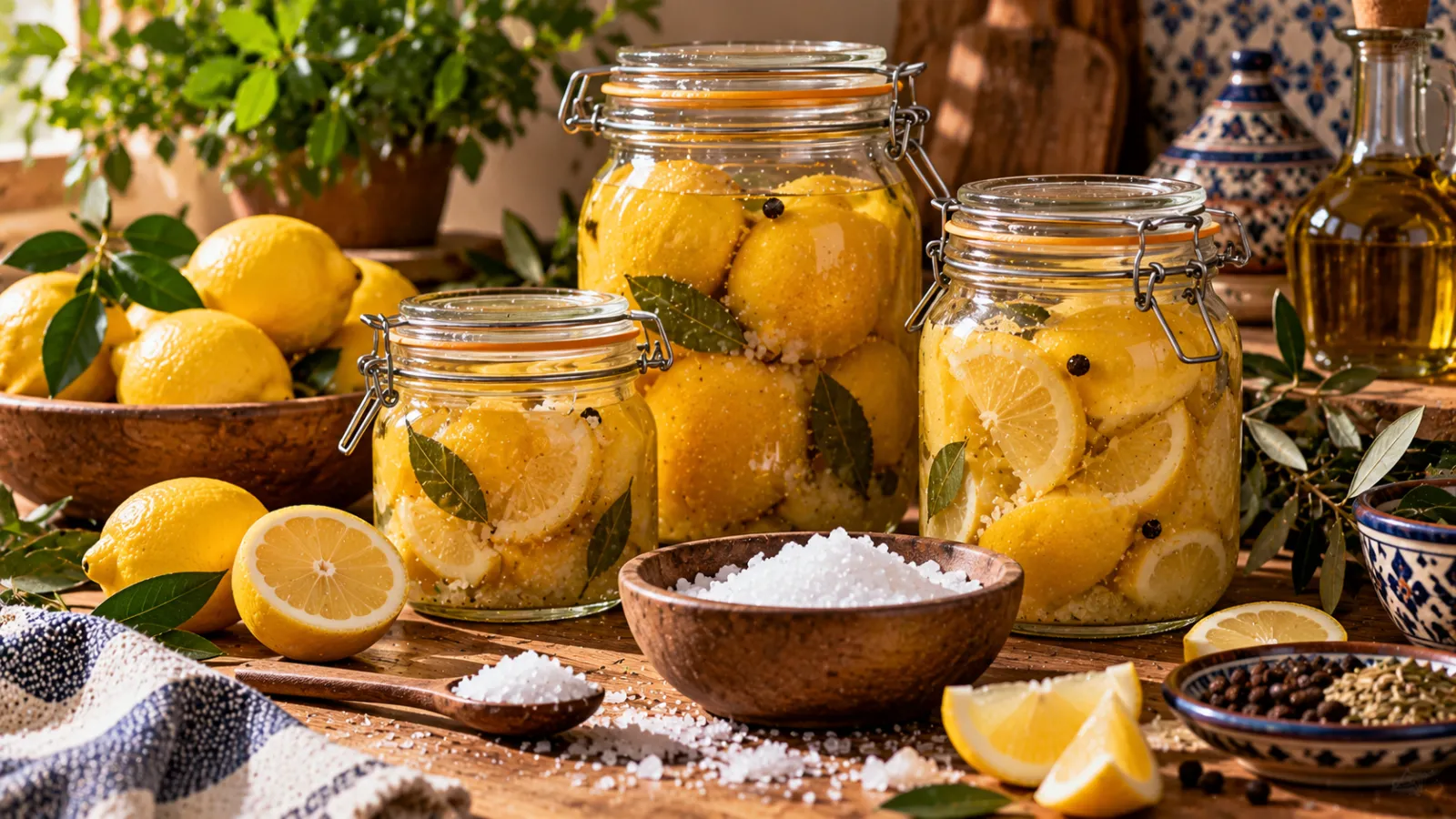
Preserved lemons are whole lemons cured in salt and their own juice until the rind turns soft, silky and intensely flavoured. They are a key ingredient in Moroccan cooking, where they bring a mellow, savoury citrus note to tagines and salads that fresh lemon simply cannot match.
They take only a few minutes of hands-on work, but they do need time. Make a jar now and in about a month you will have a supply that keeps for months in the fridge. Here is how to make them safely and how to use them once they are ready.
What you need
For one 1-quart (1-litre) jar:
- 6 to 8 unwaxed lemons for packing, plus 3 to 4 more for juice (about 1 cup / 240 ml of juice)
- About 1/2 cup (around 140 g) coarse sea salt or kosher salt; avoid iodised table salt, which can give a harsh taste
- A 1-quart (1-litre) glass jar with a tight-fitting, non-reactive lid
- Optional flavourings: 2 bay leaves, 1 cinnamon stick, a few black peppercorns or coriander seeds
Thin-skinned lemons work best, and if you can find Meyer lemons they cure especially well. If your lemons are waxed, scrub them in hot water with a brush to remove as much of the coating as possible.
Sterilising the jar
A clean jar is the foundation of a safe preserve. Use one of these methods:
- Oven method: wash the jar and lid in hot, soapy water and rinse well. Place the jar upright on a baking tray in a cold oven, heat to 275°F (140°C) and leave for 15 to 20 minutes. Boil metal lids separately for 10 minutes, since seals can be damaged in the oven.
- Boiling method: submerge the clean jar and lid in a large pot of water, bring to a boil and boil for 10 minutes. Lift them out with tongs and let them air-dry on a clean tea towel.
Fill the jar while it is still warm but not hot, and handle the inside of the jar and lid as little as possible.
How to make preserved lemons
- Prepare the lemons. Wash and dry them, and trim off any hard stem nub. Stand each lemon on its end and cut it into quarters lengthwise, stopping about 1/2 inch (1 cm) from the base so the quarters stay joined.
- Salt them. Open each lemon like a flower and pack about 1 tablespoon of salt inside, rubbing it onto the cut surfaces. Close it back up.
- Start the jar. Sprinkle 1 tablespoon of salt into the bottom of the sterilised jar.
- Pack tightly. Push the lemons in one at a time, pressing hard with a clean wooden spoon so they release their juice. Sprinkle a little salt between layers and tuck in any flavourings. Squash them in more firmly than seems reasonable; they will soften and shrink.
- Cover with juice. Pour in freshly squeezed lemon juice until the lemons are completely submerged, leaving about 1/2 inch (1 cm) of space at the top. Top with any remaining salt.
- Seal and label. Wipe the rim clean, close the lid and write the date on the jar.
How long preserved lemons take
Leave the jar somewhere cool and out of direct sunlight for 3 to 4 weeks. Turn it upside down or give it a gentle shake once a day for the first week to help dissolve the salt. After a day or two, press the lemons down again and add more lemon juice if any are poking above the surface; anything exposed to air is where problems start.
They are ready when the rinds are soft enough to cut easily with a spoon and look slightly translucent. If you prefer to keep the jar in the fridge from the start, which is a cautious choice in a warm kitchen, allow closer to 5 to 6 weeks.
Once cured, store the jar in the fridge. Kept submerged in their brine and handled with clean utensils, they generally keep well for around 6 months. Discard the whole jar if you see fuzzy mould, notice an off or rotten smell, or the lid bulges.
Rinse before you use them
Preserved lemons are very salty straight from the jar, so prepare them like this:
- Lift out a quarter or a whole lemon with a clean fork or tongs, never your fingers.
- Rinse it under cold water to remove the surface salt.
- Scoop out and discard the pulp and seeds for most recipes. The pulp is salty and can be used sparingly in sauces or dressings if you like.
- Slice or finely chop the rind.
Because they add salt as well as flavour, reduce the salt elsewhere in the recipe and taste before seasoning.
Ways to use preserved lemons
- Tagines: the classic pairing is chicken with olives and preserved lemon. Add sliced rind for the last 15 to 20 minutes of cooking so it keeps its character.
- Salads: finely diced rind brightens tomato and cucumber salads, chickpea salads, grain bowls, and carrot salads with cumin.
- Dressings: blend 1 tablespoon chopped rind with 3 tablespoons olive oil, 1 tablespoon vinegar or lemon juice, a little honey and black pepper.
- Roast chicken and fish: mix chopped rind with soft butter or olive oil, garlic and herbs and rub it under the skin of a chicken, or spoon it over baked fish.
- Grains and couscous: stir a spoonful of chopped rind into couscous, rice or lentils with fresh herbs.
- Yoghurt and dips: fold a little into yoghurt with garlic and mint, or into hummus.
- Roast vegetables: toss with roasted carrots, potatoes or cauliflower straight out of the oven.
Common mistakes
- Not enough juice. Lemons that are not fully covered can spoil. Keep extra juice on hand to top up.
- Using too little salt. The salt is what preserves the lemons; do not cut it back to make them less salty. Rinse them instead.
- Dipping dirty spoons in the jar. Always use a clean, dry utensil.
- Opening the jar too soon. Under-cured rind tastes bitter and harsh. Be patient.
A single jar of preserved lemons can lift dozens of meals, from weeknight chicken to a simple bowl of grains. To put your first batch to good use, browse our Moroccan and Arabic recipes for tagines and salads that rely on them.
Reader Comments (0)
Have thoughts on this article?
Sign in to leave a comment or share your experience.
No comments yet
Be the first to share your thoughts on this article!