How to Season Food Properly: Salt, Acid, Fat and Heat

Chef Karim
CHEF
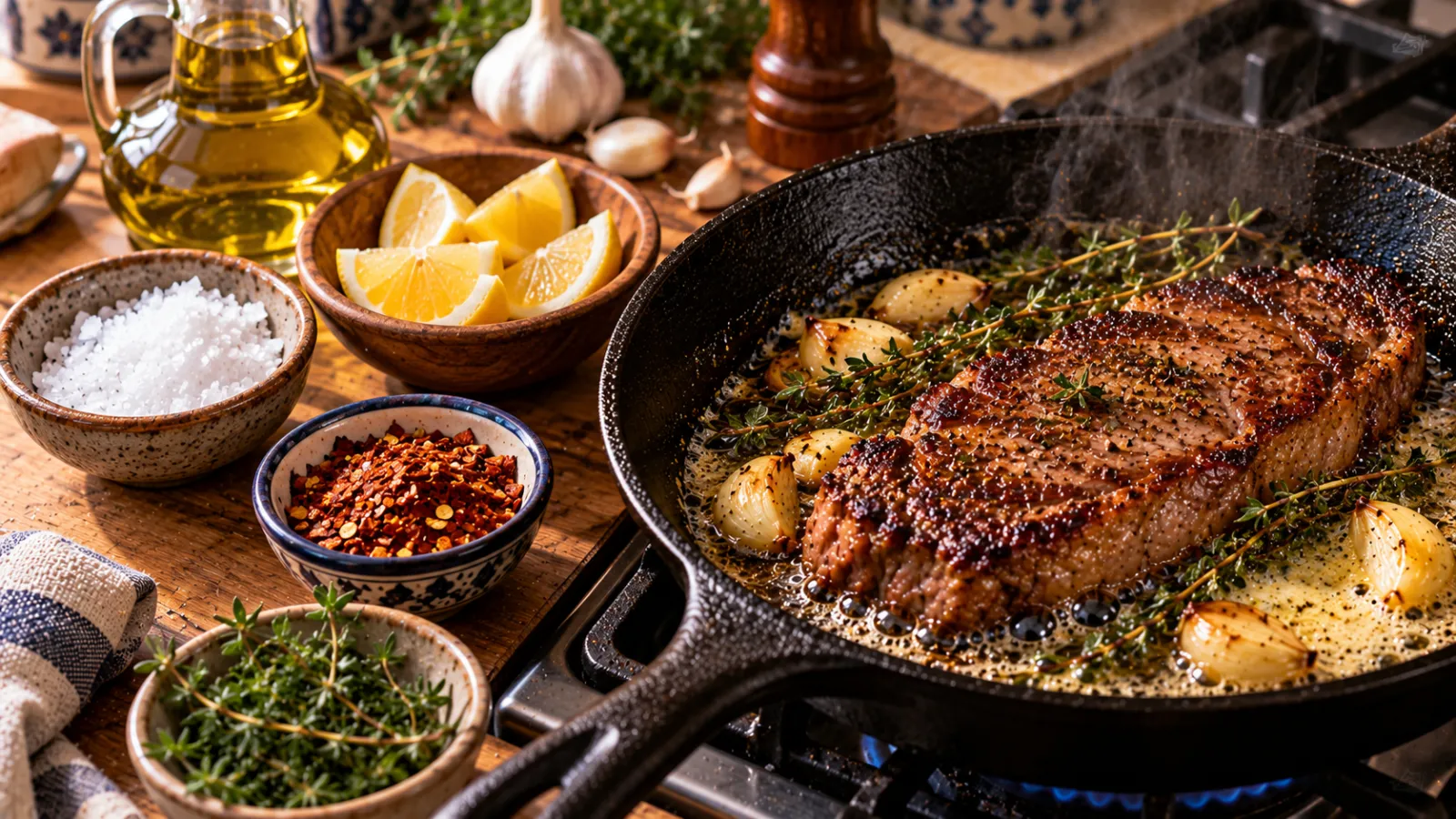
Two cooks can follow the same recipe with the same ingredients and end up with very different dishes. More often than not, the difference is seasoning. A soup that tastes flat and a soup that tastes vibrant may be separated by nothing more than a pinch of salt and a squeeze of lemon.
Seasoning is not about making food salty or spicy. It is about making ingredients taste more like themselves. Once you understand how salt, acid, fat and heat each change a dish, you can stop relying on exact measurements and start adjusting food by taste, which is what confident cooks do.
Salt: the flavor amplifier
Salt does more than add saltiness. In the right amount, it softens bitterness, rounds out sweetness, and makes aromas seem stronger. That is why under-salted food tastes dull rather than simply "not salty."
Know your salt
Different salts measure very differently by volume because the crystals are different sizes. A teaspoon of fine table salt holds roughly twice as much salt as a teaspoon of flaky or coarse kosher salt. Pick one everyday salt, learn how it behaves, and stick with it. If a recipe calls for a specific type and you are using another, start with less and adjust upward.
When to salt
- Meat and poultry: salt ahead of time when you can. Salting 45 minutes to 24 hours before cooking (refrigerated, uncovered or loosely covered) lets the salt draw out moisture, dissolve, and get reabsorbed, seasoning the meat more deeply. If you cannot salt ahead, salt right before cooking rather than 10 to 20 minutes before, when the surface will be wet.
- Pasta and vegetables boiled in water: salt the water generously, about 1 tablespoon of fine salt per 4 quarts (roughly 4 liters). The food absorbs seasoning as it cooks.
- Soups, stews and sauces: season lightly at the start and adjust at the end. Liquids reduce as they simmer, which concentrates the salt.
- Onions and vegetables in a pan: a pinch of salt early helps draw out moisture so they soften and brown more evenly.
- Finishing: a few flakes of salt on a finished steak, salad or roasted vegetables adds bright bursts of flavor and a pleasant crunch.
Salt in layers. A little at each stage gives a more even, integrated flavor than a big dose at the end.
Acid: the brightener
If a dish tastes heavy, muddy or one-note even though it has enough salt, it usually needs acid. Lemon or lime juice, vinegar, wine, tomatoes, yogurt, and pickled ingredients all add brightness and lift. Acid also cuts through richness, which is why a squeeze of lemon works so well on fried fish or a creamy pasta.
Add acid gradually, usually near the end of cooking, because long simmering dulls its sharpness. Start with half a teaspoon of vinegar or a small squeeze of citrus, stir, and taste. Different acids bring different character: rice vinegar is mild, red wine vinegar is bold, lime is floral, and balsamic adds sweetness along with tang.
Fat: the carrier
Many flavor compounds in herbs, spices and aromatics dissolve in fat rather than water, so fat helps carry those flavors across your palate. Fat also adds richness and a satisfying texture.
Use it with intention. Blooming ground spices in hot oil for 30 to 60 seconds before adding liquid releases far more flavor than stirring them into a sauce. A knob of butter swirled into a pan sauce at the end makes it glossy and smooth. A drizzle of good olive oil over soup, beans or roasted vegetables just before serving adds a fresh, fruity note that cooked oil cannot.
Too much fat makes food feel greasy and can mute other flavors. If that happens, acid is usually the fix.
Heat: spice and temperature
"Heat" means two things in seasoning, and both matter.
The first is spicy heat from chilies, black pepper, ginger, mustard or horseradish. A small amount of chili adds warmth and keeps a rich dish from feeling heavy, even if no one would call it spicy. Add chili gradually, since it is much easier to add more than to take it away, and remember that chili heat often builds as a dish sits.
The second is cooking heat. Browning creates deep, savory flavors that no seasoning can replace. Onions cooked slowly until golden taste sweet and complex; onions barely softened taste sharp. Getting good color on meat, vegetables and even tomato paste is a form of seasoning in its own right.
Serving temperature also changes perception. Cold food tastes less salty and less sweet than the same food served hot, so dishes served chilled, such as potato salad or gazpacho, usually need a little extra seasoning. Taste them cold before serving.
Taste as you go, and how to balance a dish
The single most useful seasoning habit is tasting at every stage. Keep a few clean spoons by the stove and use a fresh one each time. When a dish tastes off, run through this simple checklist:
- Flat or dull? Add a small pinch of salt, stir, and taste again.
- Salted enough but still heavy? Add acid: a little lemon juice or vinegar.
- Too sharp or sour? Add a touch of fat or a small pinch of sugar or honey.
- Too sweet? Balance with acid, salt, or a little bitterness from greens or herbs.
- Tastes fine but boring? Add contrast: fresh herbs, chili, toasted nuts, a crunchy topping, or a grating of citrus zest.
Make one change at a time and in small amounts. For a large pot, it can help to scoop out a spoonful, adjust that, and taste before treating the whole batch.
How to fix over-salted food
Mistakes happen. Unfortunately, there is no ingredient that pulls salt back out of food, and the popular trick of simmering a raw potato in soup does very little. What does work is dilution and balance:
- Add more of everything else. For soups and stews, add unsalted stock, water, extra vegetables, beans or canned tomatoes. For sauces, make a second, unsalted half-batch and combine.
- Add bulk. Serve salty dishes with plain rice, pasta, bread or potatoes to spread the salt out.
- Use balancing flavors. Acid, a little fat such as cream or unsalted butter, or a small amount of sweetness can make saltiness less noticeable, though they do not remove it.
- Repurpose it. Over-salted roasted vegetables or meat can be chopped and mixed into an unseasoned grain salad, omelet or soup.
The best prevention is simple: season in small steps, and taste before each addition.
Quick tips
- Season from a height of about 8 to 12 inches (20 to 30 cm) so salt falls evenly over meat and vegetables.
- Remember that cheese, cured meats, soy sauce, olives, capers and many stock cubes are already salty. Taste before adding more salt.
- Keep lemons and at least one vinegar in the kitchen at all times. They rescue more dishes than any spice.
Seasoning is a skill you build with every meal, one taste at a time. Use recipes as a starting point, trust your palate, and adjust until a dish tastes the way you want it to. If you need something to practice on, browse our recipes and try tasting and adjusting at each step.
Reader Comments (0)
Have thoughts on this article?
Sign in to leave a comment or share your experience.
No comments yet
Be the first to share your thoughts on this article!