How to Sear Meat for a Golden Crust

Chef Karim
CHEF
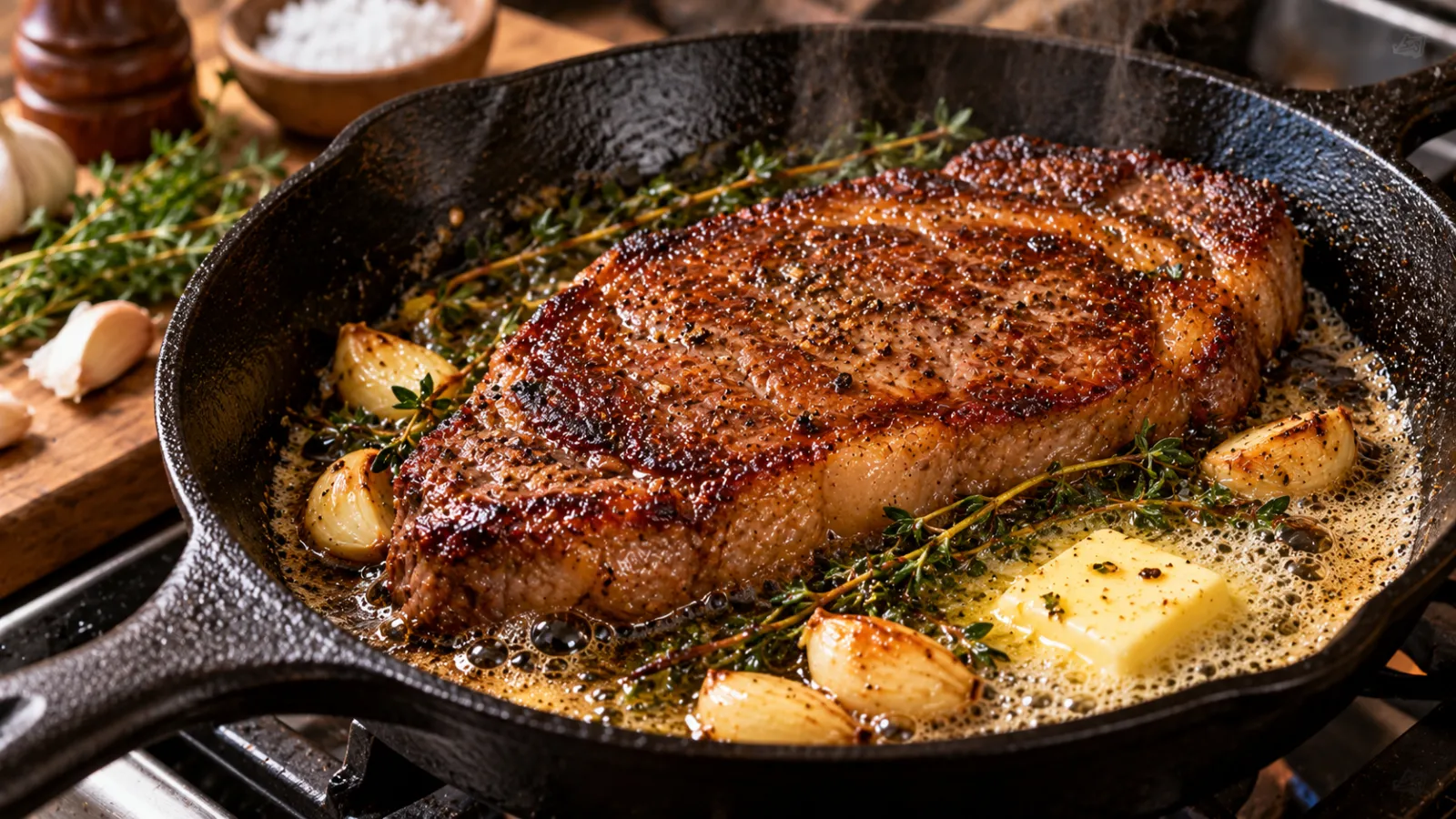
A well-seared steak, pork chop or chicken thigh has a deep brown, crisp, savory crust that makes the first bite memorable. That crust is the result of browning reactions between proteins and sugars on the surface of the meat, which happen quickly once the surface is hot and dry. They create hundreds of flavor compounds you simply cannot get from boiling or steaming.
The good news is that a great sear does not require restaurant equipment. It requires a dry surface, a properly hot pan, enough space, and the patience to leave the meat alone. Here is how to do it, step by step, and how to turn the browned bits left in the pan into a quick sauce.
Choose the right pan
Heavy pans hold heat. When cold meat hits a thin pan, the temperature plunges and the meat starts to steam instead of sear. Cast iron and thick stainless steel or carbon steel pans are the best choices because they store a lot of heat and recover quickly.
Nonstick pans can work for delicate foods, but most are not designed for the high heat that searing needs, and the slick surface prevents the browned bits (called fond) from forming, which means no pan sauce. Pick a pan large enough that pieces sit with at least 1 inch (2.5 cm) between them.
Step 1: Get the surface dry
Moisture is the enemy of a crust. While there is water on the surface, the meat cannot get much hotter than the boiling point of water, 212°F (100°C), and browning happens well above that. Every bit of surface water has to evaporate before real browning begins.
- Pat the meat thoroughly dry with paper towels on all sides just before cooking.
- For even better results, salt the meat and leave it uncovered on a rack in the refrigerator for a few hours or overnight. The surface dries out and the salt seasons the meat more deeply.
- If you salt shortly before cooking, do it right before the meat goes into the pan, then pat dry again if beads of moisture appear.
- Thawed frozen meat often releases extra liquid, so dry it especially well.
Take thinner cuts out of the fridge just before cooking. For thick steaks and chops, letting them sit at room temperature for no more than 30 minutes is plenty; the surface is what matters most for the sear.
Step 2: Preheat the pan properly
Place the empty pan over medium-high heat and let it heat for 3 to 5 minutes. Cast iron in particular heats unevenly, so give it time. Then add a thin layer of oil, about 1 to 2 teaspoons for a 10 to 12 inch (25 to 30 cm) pan, just enough to coat the bottom.
The pan is ready when the oil shimmers and moves easily, like water, and the first wisps of smoke appear. A drop of water flicked into the pan should sizzle and dance immediately. If the meat does not sizzle loudly the moment it touches the pan, the pan was not hot enough.
Turn on your extractor fan before you start. Proper searing does make some smoke.
Choose an oil that can take the heat
Use an oil with a high smoke point and a neutral flavor. Good options include:
- Canola (rapeseed) oil
- Vegetable or sunflower oil
- Peanut (groundnut) oil
- Avocado oil
- Refined (light) olive oil
Butter and extra-virgin olive oil taste wonderful but burn at searing temperatures. If you want butter flavor, add a tablespoon or two in the last minute or two of cooking, along with garlic and a sprig of thyme or rosemary, and spoon the foaming butter over the meat.
Step 3: Do not crowd, and do not fuss
Lay the meat in the pan, placing it away from you so hot oil does not splash toward you. Leave space between pieces. A crowded pan traps steam and drops the temperature, so the meat turns grey and releases juices instead of browning. If everything does not fit, cook in batches and keep finished pieces warm on a plate.
Then leave it alone. Meat sticks to the pan at first and releases naturally once a crust has formed. If you try to lift it and it resists, give it another 30 to 60 seconds. As a rough guide for medium-high heat:
- Steak about 1 inch (2.5 cm) thick: 3 to 4 minutes per side for medium-rare, turning once or every minute for a more even result.
- Bone-in pork chops about 1 inch thick: 4 to 5 minutes per side.
- Skin-on chicken thighs: skin side down 8 to 10 minutes over medium heat until deeply golden, then flip and finish.
Thick cuts may brown well on the outside before the center is done. In that case, sear both sides, then move the pan into an oven preheated to 400°F (200°C) to finish cooking.
Step 4: Check doneness and rest
An instant-read thermometer takes the guesswork out of searing. Insert it into the thickest part, away from bone. Mainstream food-safety guidance is to cook whole cuts of beef, pork and lamb to at least 145°F (63°C) followed by a 3 minute rest, and all poultry to 165°F (74°C). Many people choose to cook steak less than that, but if you are cooking for children, older adults, pregnant people or anyone with a weakened immune system, stick to the recommended temperatures.
Let seared meat rest on a plate or board for about 5 minutes for steaks and chops, longer for large roasts. Resting lets the juices settle so less runs out when you slice. Keep in mind that the temperature will continue to rise by a few degrees while it rests.
Step 5: Deglaze for a quick pan sauce
Those brown bits stuck to the pan are concentrated flavor. While the meat rests, turn them into a sauce:
- Pour off most of the fat, leaving about 1 tablespoon. Lower the heat to medium.
- Add a finely chopped shallot or small onion and cook for 1 to 2 minutes until soft.
- Pour in about 1/2 cup (120 ml) of liquid: stock, wine, or a mix. Scrape the bottom with a wooden spoon to loosen all the browned bits.
- Simmer until the liquid has reduced by about half and looks slightly syrupy, 2 to 4 minutes.
- Take the pan off the heat and swirl in 1 to 2 tablespoons of cold butter. Add any juices from the resting plate, then taste and adjust with salt, pepper, a splash of vinegar or lemon, a spoonful of mustard, or fresh herbs.
If the fond in the pan has turned black rather than brown, skip the sauce. Burnt bits taste bitter.
Common mistakes
- Wet meat: leads to steaming and a pale surface. Always pat dry.
- Cold pan: the meat sticks and stews. Preheat for several minutes.
- Too much oil: the meat shallow-fries and splatters. A thin film is enough.
- Moving it too soon: tears the crust. Wait until it releases.
- Cutting straight away: juices run onto the board. Rest first.
Once you have mastered the sear, you have a technique that works for steaks, chops, chicken, fish fillets, scallops and even tofu and thick slices of vegetables. Looking for something to try it on? Browse our recipes for seared mains and simple pan sauces.
Reader Comments (0)
Have thoughts on this article?
Sign in to leave a comment or share your experience.
No comments yet
Be the first to share your thoughts on this article!