How to Cook Perfectly Fluffy Rice Every Time

Chef Karim
CHEF
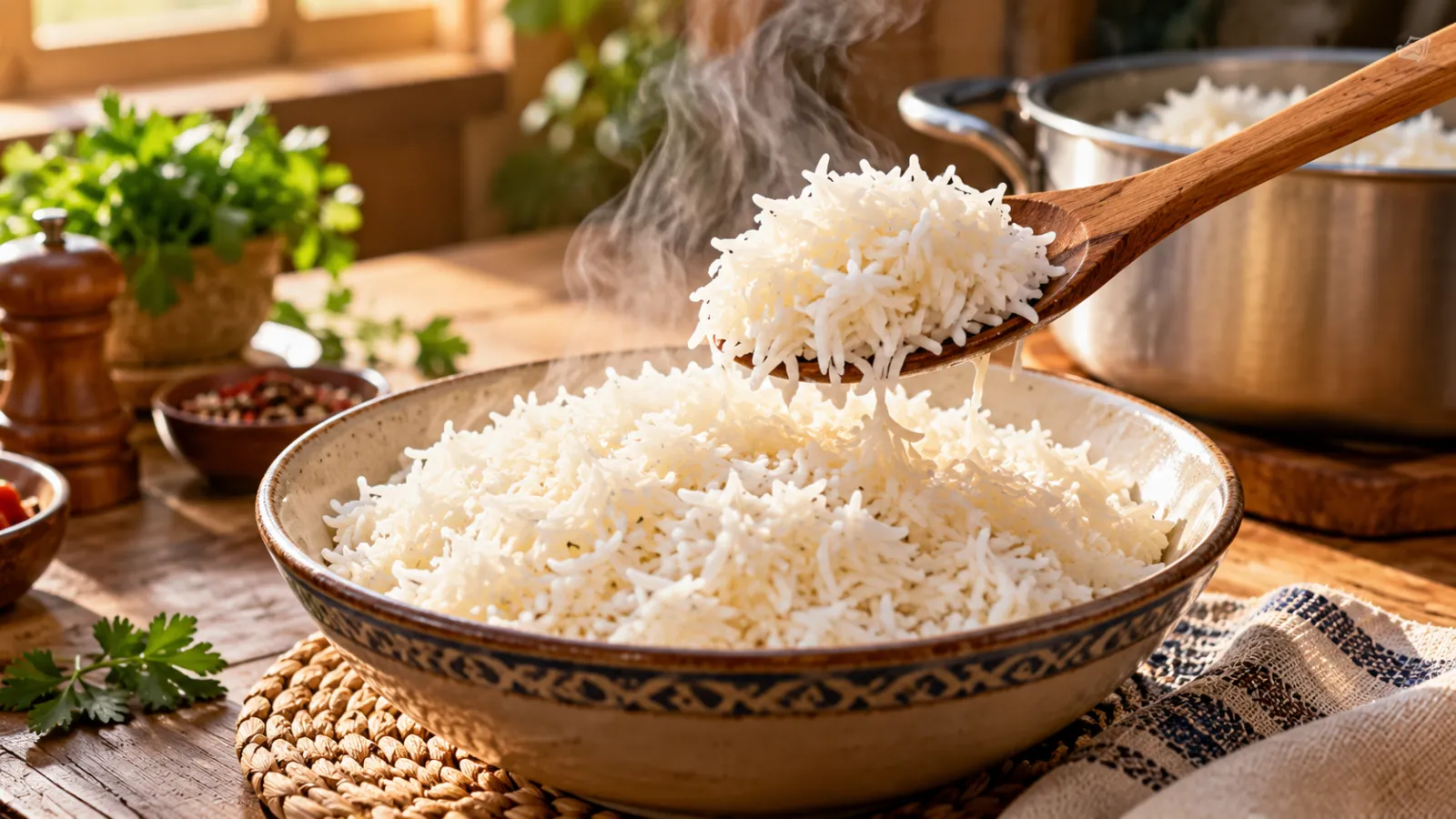
Rice looks like the simplest thing in the kitchen, yet it is one of the dishes home cooks most often get wrong. One night it is gluey, the next it is scorched on the bottom and chalky in the middle. The good news is that fluffy rice is not luck. It comes down to a handful of steps you can repeat every single time.
This guide covers the stovetop absorption method, which needs nothing more than a pot with a tight-fitting lid. You will learn why rinsing matters, how much water each type of rice needs, why the resting stage is not optional, and how to rescue a batch that went sideways.
Why the absorption method works
With the absorption method you add a measured amount of water, bring it to a boil, then cover and cook on very low heat until the grains have soaked up all the liquid. Nothing is drained. Because the amount of water is controlled, the grains finish cooking at the same moment the pot runs dry, which is exactly what you want.
Success comes down to the right ratio and keeping the steam in the pot.
Step 1: Rinse the rice
Dry rice is coated in loose surface starch. If it goes into the pot unrinsed, that starch dissolves into the cooking water and turns it into a thin paste that glues the grains together. Rinsing removes most of it.
Put the rice in a bowl, cover it with cold water, swirl it with your hand, and pour off the cloudy water. Repeat three or four times until the water is mostly clear. A fine-mesh sieve makes draining easier. Let the rice drain well for a minute or two, because extra water clinging to the grains will throw off your ratio.
There are exceptions. Short-grain rice for risotto or rice pudding is usually left unrinsed because you want that starch to create creaminess. Some enriched rice sold in the US is also labeled "do not rinse" so the added nutrients are not washed away; follow the package if it says so.
Step 2: Use the right ratio for your rice
The ratio on many packets is generous because it assumes some water will be lost to a loose lid. With a well-fitting lid, these ratios (measured after rinsing and draining) give reliably fluffy results:
- Long-grain white rice: 1 cup (about 185 g) rice to 1 1/2 cups (360 ml) water. Simmer 15 to 18 minutes.
- Basmati: 1 cup (about 190 g) rice to 1 1/2 cups (360 ml) water. Simmer 12 to 15 minutes. Soaking for 20 to 30 minutes beforehand gives longer, more separate grains; if you soak, reduce the water to about 1 1/4 cups (300 ml).
- Jasmine: 1 cup (about 190 g) rice to 1 1/4 cups (300 ml) water. Simmer 12 to 15 minutes. Jasmine is naturally softer and slightly sticky, so it needs less water.
- Medium or short-grain white (such as sushi rice): 1 cup (about 200 g) rice to 1 1/4 cups (300 ml) water. Simmer about 15 minutes.
- Brown rice: 1 cup (about 190 g) rice to 2 cups (480 ml) water. Simmer 40 to 45 minutes. The bran layer slows absorption, so it needs more liquid and time.
One cup of dry rice makes roughly 3 cups of cooked rice, enough for three to four side portions. When you scale up, do not simply multiply the water. Less water evaporates per cup in a larger batch, so for 3 cups of rice or more, reduce the total water by a couple of tablespoons per cup.
Use a pot that leaves the rice about 1 to 2 inches (3 to 5 cm) deep. A pot that is too wide spreads the rice thin and dries it out; one that is too narrow cooks unevenly from bottom to top.
Step 3: Boil, simmer low, then rest
- Add the rinsed rice, measured water, and about 1/2 teaspoon of fine salt per cup of rice to the pot.
- Bring it to a full boil over medium-high heat, uncovered. Give it one gentle stir to make sure no grains are stuck to the bottom.
- As soon as it boils, cover tightly and turn the heat down to the lowest setting your stove has. You should hear only a faint bubbling.
- Set a timer for the simmer time listed above and do not lift the lid. Every peek lets out steam the rice needs to cook through.
If your lid fits loosely or has a steam hole, lay a clean kitchen towel or a sheet of foil over the pot before putting the lid on. Fold the corners up over the lid so the cloth stays well away from the flame.
Rest, then fluff
When the timer goes off, take the pot off the heat and leave it covered for 10 minutes. This resting time is where rice goes from "almost there" to perfect. Steam finishes the top layer, moisture evens out, and the grains firm up so they do not break.
After resting, remove the lid and fluff the rice with a fork or a rice paddle, lifting from the bottom and gently separating the grains rather than stirring like a sauce. Serve right away, or replace the lid until you are ready.
Common mistakes and how to fix them
- Mushy or sticky rice: too much water, no rinsing, or stirring during cooking. Next time cut the water by 2 tablespoons per cup. To salvage a soggy batch, spread it on a baking sheet and let it steam dry for a few minutes, or turn it into fried rice the next day.
- Crunchy or hard rice: not enough water or the lid let steam escape. Sprinkle 2 to 3 tablespoons of hot water over the rice, cover tightly, and cook on the lowest heat for 5 more minutes.
- Burnt bottom: heat too high during the simmer or a thin pot. Use a heavy-bottomed pan and the lowest flame. Do not scrape the scorched layer into the rest of the rice; scoop from the top.
- Bland rice: no salt. Salt dissolved in the cooking water seasons every grain in a way that sprinkling on top never will.
- Wet on top, dry on the bottom: you skipped the rest. Those 10 minutes are part of the cooking time.
Storing and reheating cooked rice safely
Cooked rice needs a little extra care. Spores of certain bacteria can survive cooking, and if rice sits warm for too long they can multiply. Cool leftover rice quickly by spreading it in a shallow container, and refrigerate it within 1 hour if you can and never later than 2 hours after cooking. Keep the fridge at or below 40°F (4°C) and eat the rice within 3 to 4 days, or freeze it in portions for up to a month or two.
To reheat, sprinkle with a spoonful of water, cover, and microwave or steam until it is steaming hot all the way through, at least 165°F (74°C). Reheat rice only once.
Quick tips
- Use the same measuring cup for rice and water so the ratio stays accurate.
- Toast the rinsed, drained rice in a little butter or oil for 1 to 2 minutes before adding water for a nuttier flavor.
- Swap some or all of the water for stock to make a simple, savory side.
Once you have cooked rice this way two or three times, the method becomes second nature, and you will rarely need to think about it again. If you have a pot of leftover rice and no plan for it, ask the Smart Chef for ideas, from fried rice to stuffed peppers to a quick rice pudding.
Reader Comments (0)
Have thoughts on this article?
Sign in to leave a comment or share your experience.
No comments yet
Be the first to share your thoughts on this article!