How to Cook on a Budget Without Eating the Same Meal Every Day

Chef Karim
CHEF
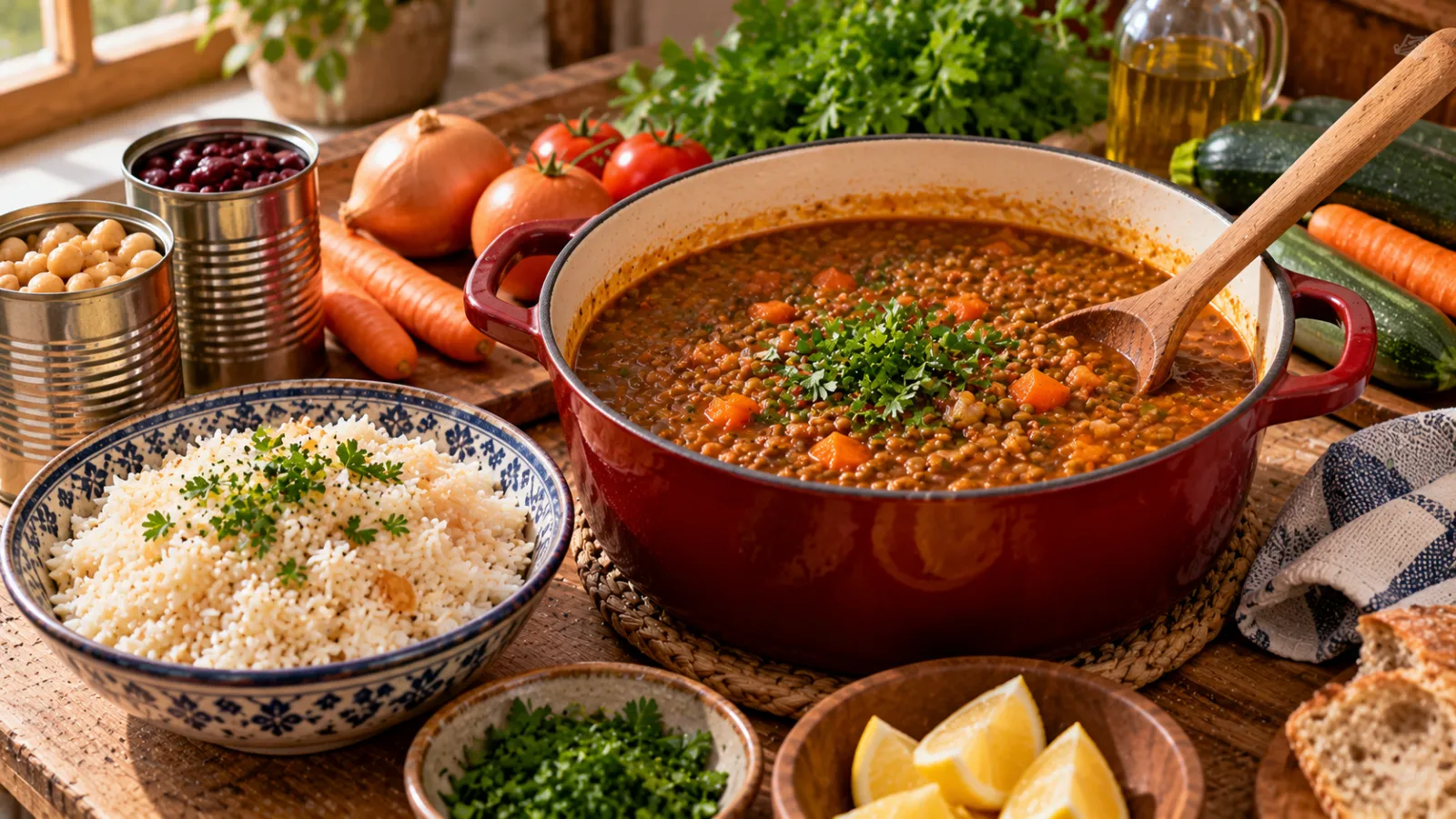
Cooking on a budget often gets reduced to one piece of advice: make a giant pot of something and eat it all week. It works, but by day four most people are reaching for a takeaway menu, which defeats the purpose.
A better approach is to build meals from a small set of inexpensive, versatile ingredients and change the flavours around them. This guide covers the staples worth buying, the "cook once, eat twice" habit, cheap ways to add big flavour, and how to shop smarter with seasonal produce, unit prices and the freezer aisle.
Build around cheap, versatile staples
A handful of ingredients do most of the heavy lifting in a budget kitchen. They're inexpensive per portion, keep well, and work across many cuisines.
- Dried and canned beans and lentils. Red lentils cook in 15–20 minutes without soaking, and a 15 oz (400 g) can of chickpeas or black beans stretches a meal for two.
- Rice, pasta, oats and bread. Larger bags are usually cheaper per pound or kilo.
- Eggs. An affordable, fast protein for any meal of the day.
- Onions, carrots, cabbage and potatoes. Long-keeping, cheap, and the base of countless dishes.
- Canned tomatoes. The backbone of sauces, soups, curries and stews.
- Cheaper cuts of meat. Chicken thighs, ground meat and stewing cuts like beef chuck or pork shoulder give more flavour for the money than lean premium cuts.
Use meat as a flavouring rather than the centrepiece. For example, 8 oz (225 g) of ground beef bulked out with a can of lentils makes a bolognese sauce for four.
Cook once, eat twice (differently)
The secret to avoiding repetition is cooking a base that becomes something different the next day, rather than the same dish reheated. A few examples:
- Roast chicken. Night one: roast with potatoes. Night two: shredded into tacos or fried rice. Then simmer the carcass with onion and carrot for stock.
- A big pot of beans. Night one: chili. Night two: smashed on toast with an egg, or blended into soup.
- Tomato sauce. Night one: pasta. Night two: eggs poached in the sauce, shakshuka-style, or a base for homemade pizza.
- Plain rice. Night one: with a curry. Night two: chilled leftover rice makes the best fried rice.
- Roasted vegetables. Night one: a side dish. Night two: blended into soup or tossed through pasta with cheese.
Keep the base simply seasoned so it can go in different directions. Refrigerate leftovers within two hours of cooking and use them within 3–4 days.
Flavour boosters that cost very little
Cheap ingredients only taste boring when they're underseasoned. A small collection of flavour boosters lasts for months and transforms basic dishes, and most are used by the teaspoon:
- Acids: lemons, limes and vinegars. A splash at the end brightens heavy beans or lentils.
- Umami: soy sauce, tomato paste, miso, fish sauce and parmesan rinds.
- Spices: cumin, smoked paprika, chili flakes, curry powder and dried oregano. The bulk or international aisle is often cheaper.
- Aromatics: garlic, ginger and onions. Frozen grated ginger or garlic is a handy backup.
- Heat and condiments: hot sauce, chili paste and mustard.
- Fresh herbs: grow a pot of parsley or basil on a windowsill, or buy one bunch and use it across several meals.
The same pot of lentils can go Indian-inspired with cumin, turmeric and garam masala; Mediterranean with oregano, lemon and feta; or Mexican-inspired with cumin, smoked paprika and lime. Change the boosters, not the base.
Shop with the seasons
Fruit and vegetables in season are usually more plentiful, so they're often cheaper and taste better. You don't need to memorise a calendar. Watch for produce piled high on display, prices dropping from week to week, and what's abundant at local markets.
As a general guide in the Northern Hemisphere, root vegetables, cabbage, squash and apples are good value in autumn and winter, while tomatoes, zucchini (courgettes), corn and berries are cheaper in summer. In Australia the seasons are flipped. Hardy staples like onions, carrots and potatoes tend to be reasonably priced all year.
Read unit prices, not sticker prices
The unit price, meaning the cost per ounce, pound, 100 g or kilo, is usually printed in small type on the shelf label. It's the fairest way to compare a large pack with a small one, or a name-brand product with a store's own label.
- Bigger isn't always cheaper, so check before you assume.
- Store-brand basics like flour, canned tomatoes, rice and frozen vegetables are often very similar to name-brand versions.
- Only buy in bulk what you'll use before it spoils. A cheap sack of potatoes that sprouts is not a bargain.
- Compare pre-cut or pre-washed produce with whole versions; you often pay a lot extra for convenience.
Make friends with frozen vegetables
Frozen vegetables are already prepped, keep for months, and let you use exactly what you need, so less ends up in the bin. Peas, spinach, corn, green beans, broccoli and mixed stir-fry vegetables are all worth keeping on hand.
Add frozen spinach straight to soups, curries and pasta sauces; it wilts in a minute or two. Roast frozen broccoli or cauliflower straight from the freezer at 425°F (220°C) for 20–25 minutes, spread out on the tray so it browns rather than steams. Frozen berries are perfect for oatmeal, smoothies and baking.
Quick tips
- Plan meals around what's on sale, not the other way round.
- Shop with a list and stick to it.
- Check your fridge and pantry before every shop.
- Cook a little extra and freeze single portions for nights you'd otherwise order in.
- Save bread crusts for breadcrumbs and vegetable trimmings for stock.
Eating well on a budget is mostly about habits: a few dependable staples, smart leftovers and a shelf of flavour boosters. Once those are in place, variety comes easily and the grocery bill stays under control. If you're staring at a half-empty fridge wondering what's possible, ask the Smart Chef to suggest a meal from what you already have.
Reader Comments (0)
Have thoughts on this article?
Sign in to leave a comment or share your experience.
No comments yet
Be the first to share your thoughts on this article!