How to Cook Eggs Six Ways: Boiled, Fried, Scrambled, Poached, Baked and Omelette

Chef Karim
CHEF
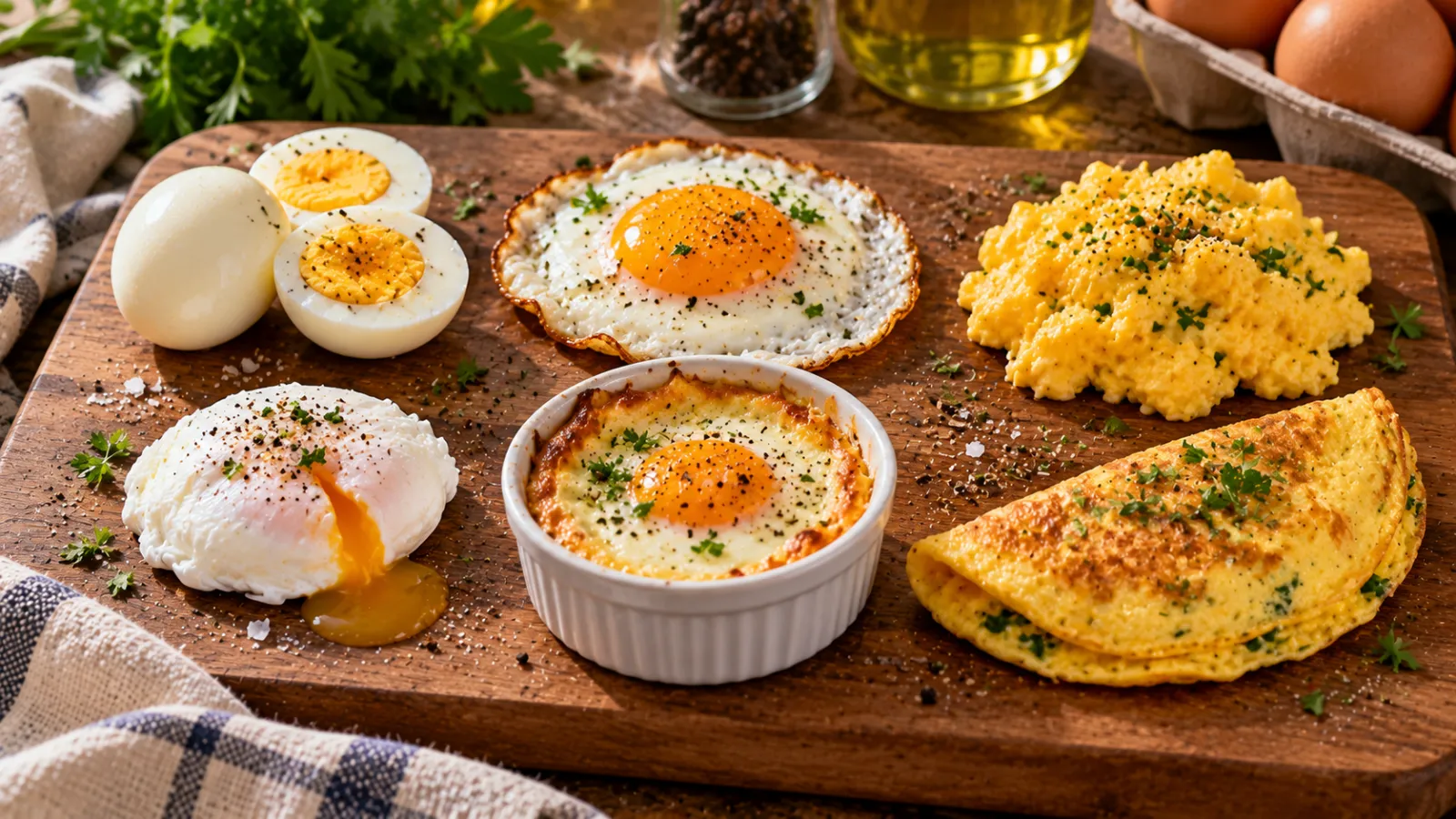
Eggs are one of the most useful ingredients in any kitchen. They are inexpensive, cook in minutes and work for breakfast, lunch or a quick dinner. Yet they are also easy to get wrong: rubbery whites, chalky yolks, poached eggs that dissolve into wispy clouds.
The secret to every egg method is controlling heat and time. This guide covers six classic techniques with clear timings and temperatures, plus fixes for the most common problems. All timings below are for large eggs straight from the fridge; adjust slightly for medium or extra-large eggs.
1. Boiled eggs: soft, jammy and hard
Bring a saucepan of water to a full boil, enough to cover the eggs by about 1 inch (2.5 cm). Lower the eggs in gently with a spoon, then reduce the heat to a steady, gentle boil. Start your timer as soon as the eggs go in.
- 6 minutes: soft-boiled, with a set white and runny yolk, ideal for dipping toast.
- 7 minutes: jammy, with a yolk that is thick and glossy at the centre, perfect for ramen, salads and toast.
- 9 minutes: medium, with a just-firm yolk that is still slightly soft in the middle.
- 11–12 minutes: hard-boiled, fully set yolk, good for egg salad and devilled eggs.
As soon as the time is up, transfer the eggs to a bowl of ice water for at least 5 minutes. This stops the cooking and makes peeling easier. Very fresh eggs can be harder to peel, so for hard-boiled eggs, ones that are a week or two old often peel more cleanly.
Troubleshooting: A green-grey ring around the yolk means the egg was overcooked or cooled too slowly. It is harmless, but shorter cooking and an ice bath prevent it. Cracked shells usually come from dropping cold eggs into water too roughly; lower them in gently.
2. Fried eggs: sunny side up, over easy and crispy
Heat a non-stick or well-seasoned pan over medium-low heat with about 1 teaspoon of butter or oil. Crack the egg into a small bowl first, then slide it into the pan. This makes it easy to catch shell and keeps the yolk intact.
- Sunny side up: Cook gently for 3–4 minutes until the white is set and the yolk is still runny. Covering the pan with a lid for the last minute helps set the top of the white.
- Over easy: Cook until the white is mostly set, flip carefully and cook 20–30 seconds more. Over medium takes about 1 minute; over hard about 2 minutes.
- Crispy edges: Use medium-high heat and a little more oil. The edges will bubble and turn golden lace-like while the yolk stays soft. Spoon hot oil over the white to help it set.
Troubleshooting: If the white is rubbery and the bottom is brown but the top is still raw, the heat is too high. Lower it and use a lid.
3. Scrambled eggs: soft and creamy or fluffy
Beat 2–3 eggs with a pinch of salt until no streaks of white remain. Melt a knob of butter in a non-stick pan over low to medium-low heat. Pour in the eggs and let them sit for a few seconds, then stir slowly with a spatula, pushing the set egg from the edges towards the centre.
For soft, creamy curds, keep the heat low and stir almost constantly; it will take 3–5 minutes. For larger, fluffier curds, use medium heat and fold the eggs less often. Either way, take the pan off the heat while the eggs still look slightly wet, because they keep cooking from the residual heat.
Troubleshooting: Watery scrambled eggs usually mean they were overcooked, which squeezes out moisture. Dry, rubbery eggs mean the heat was too high. Add cheese or herbs at the very end.
4. Poached eggs
Poaching works best with fresh eggs, because their whites are firmer and hold together. Older eggs have thinner whites that spread out in the water.
- Fill a wide saucepan with about 3 inches (7–8 cm) of water and bring it to a gentle simmer, with small bubbles on the bottom but no rolling boil. Roughly 180–190°F (82–88°C) is ideal.
- Crack an egg into a fine sieve over a bowl and let the thin, watery part of the white drain away for a few seconds. This is the part that makes wispy strands.
- Tip the egg into a small cup, then lower the cup close to the water and slide the egg in.
- Cook for 3 minutes for a runny yolk, or 4 minutes for a slightly firmer one.
- Lift out with a slotted spoon and blot the bottom on paper towel.
A splash of vinegar (about 1 tablespoon per litre/quart) can help the white set faster, but with fresh eggs and the sieve trick it is optional. Swirling the water into a gentle whirlpool can help when cooking one egg at a time.
Make-ahead tip: Poach eggs, then drop them into ice water and refrigerate for up to a day. Reheat in hot (not boiling) water for about 1 minute.
5. Baked eggs
Baked eggs, sometimes called shirred eggs, are an easy way to cook for several people at once. Heat the oven to 375°F (190°C). Grease small ramekins with butter, add a spoonful of cream or a few spoons of tomato sauce, sautéed spinach or cooked mushrooms, and crack 1–2 eggs into each. Season and bake for 12–15 minutes, until the whites are set and the yolks still jiggle slightly.
For a crowd, you can also crack eggs into wells in a skillet of tomato sauce or sautéed greens and bake the whole pan, or bake eggs in a lightly greased muffin tin for about 12–15 minutes.
Troubleshooting: Ovens vary, and eggs go from runny to firm quickly, so start checking a couple of minutes early. Remove them when the yolks are a little looser than you want; they continue to set as they rest.
6. The classic omelette
Beat 2–3 eggs with a pinch of salt. Heat an 8-inch (20 cm) non-stick pan over medium heat and add a small knob of butter. When the foam subsides, pour in the eggs.
- Stir quickly with a spatula for about 10–15 seconds while shaking the pan, to create small, soft curds.
- Stop stirring and let the bottom set for 20–30 seconds, tilting the pan so any runny egg fills the gaps.
- While the top is still slightly soft, add fillings in a line across the centre: grated cheese, ham, herbs or sautéed vegetables.
- Fold one third over the filling, then slide the omelette onto a plate, rolling it over to finish the fold.
Cook fillings like mushrooms and onions beforehand, because they will not cook through in the short time the omelette takes.
Egg safety basics
- Store eggs in the fridge at or below 40°F (4°C), ideally in their carton on a shelf rather than in the door.
- Do not use eggs with cracked or dirty shells.
- Refrigerate cooked egg dishes within 2 hours and eat within 3–4 days; peeled or unpeeled hard-boiled eggs within about a week.
- For young children, pregnant people, older adults and anyone with a weakened immune system, mainstream guidance is to cook eggs until both the white and yolk are firm.
Once you know the time and heat each method needs, eggs become one of the quickest and most reliable things you can cook. Practise one technique at a time, keep notes on what works with your stove, and then try them in our breakfast recipes.
Reader Comments (0)
Have thoughts on this article?
Sign in to leave a comment or share your experience.
No comments yet
Be the first to share your thoughts on this article!