How Long Do Leftovers Last? A Simple Food Storage Guide

Chef Karim
CHEF
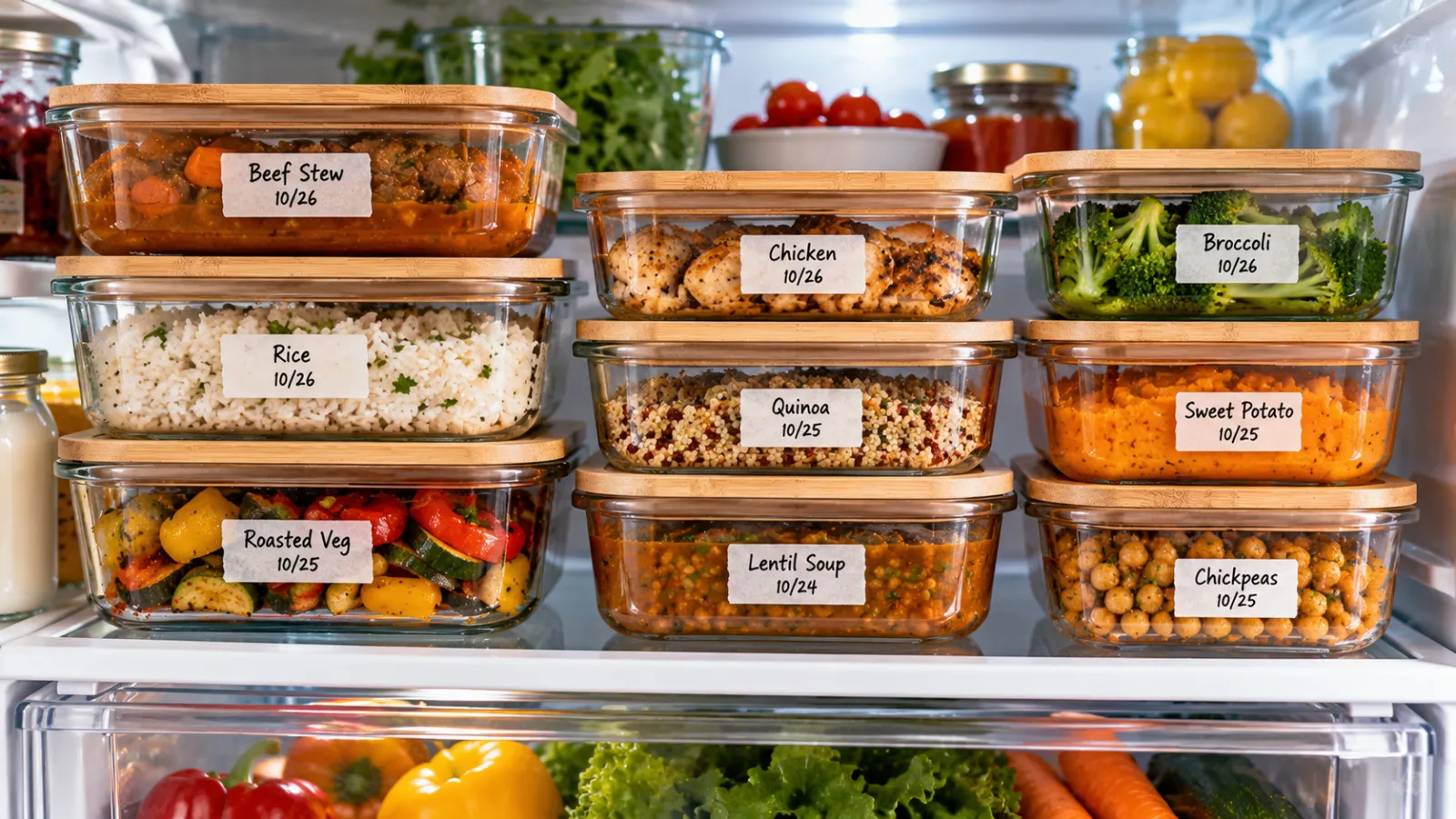
Leftovers are one of the best things about home cooking: tomorrow's lunch sorted, or a night off from the stove. But the same questions come up again and again. How long can that curry sit in the fridge? Is it okay to put warm food straight in? How long is frozen chili good for?
This guide brings together widely accepted, conservative food-safety guidance in one place. Exact advice varies a little by country and by food, so if a package label or your local food-safety authority gives a stricter instruction, follow that. And always remember the golden rule: when in doubt, throw it out.
The 2-hour rule
Bacteria multiply fastest between 40°F and 140°F (4°C and 60°C), a range often called the "danger zone". To limit the time cooked food spends there:
- Refrigerate leftovers within 2 hours of cooking, or of taking them out of the oven or off the heat.
- Cut that to 1 hour in hot conditions. If the air temperature is above 90°F (32°C), such as at a summer barbecue or picnic, the limit drops to 1 hour.
- Count the total time. Time on the serving table, in the car and on the counter all adds up.
Food left out longer than this should be thrown away. Reheating won't necessarily make it safe, because some bacteria produce toxins that heat doesn't destroy. Cooked rice is a well-known example, so cool and refrigerate it promptly, ideally within an hour.
How long leftovers last in the fridge
Keep your fridge at or below 40°F (4°C). A fridge thermometer is inexpensive and worth having, since built-in dials don't always reflect the actual temperature.
As general guidance, most cooked leftovers should be eaten within 3–4 days. That includes:
- Cooked meat, poultry and fish dishes
- Soups, stews, curries and chili
- Cooked pasta and grains
- Casseroles, pasta bakes and cooked vegetables
- Leftover pizza
Some foods are best eaten sooner. Some food-safety authorities advise eating leftover cooked rice within 24 hours, which is a sensible, cautious habit. Opened deli meats, fresh dips and pre-made salads often have shorter lives too, so check the label. Remember that the clock starts when the food was cooked, not when you moved it to a new container or last reheated it.
How long leftovers last in the freezer
At 0°F (−18°C), freezing stops bacteria from growing, so frozen food stays safe for a long time. What changes is quality: texture, flavour and moisture decline, and freezer burn creeps in. These approximate times are for best quality:
- Soups, stews and chili: 2–3 months
- Cooked meat and poultry dishes: 2–3 months
- Casseroles and pasta bakes: 2–3 months
- Cooked rice and grains: 1–2 months
- Bread: about 3 months
Freeze leftovers as soon as you know you won't eat them in time, not on day four. Freezing pauses the clock but doesn't reset it. Once thawed, eat leftovers promptly and avoid refreezing them.
Cooling large batches safely
A big pot of soup or stew holds heat for hours, and the centre can stay in the danger zone long after the outside feels cool. To cool large batches quickly:
- Divide it up into shallow containers, ideally no more than about 2 inches (5 cm) deep.
- Use an ice bath. Set the pot in a sink of ice water and stir every few minutes.
- Cut large pieces down. Slice roasts into smaller portions and take meat off the bone.
- Leave room for air around containers in the fridge rather than stacking them tightly.
- Refrigerate while still warm. You don't need to wait for food to reach room temperature; small, shallow containers of warm food can go straight in.
The aim is to get cooked food below 40°F (4°C) as quickly as possible. A common professional guideline is to cool food from 140°F (60°C) to 70°F (21°C) within 2 hours, and then to 40°F (4°C) or below within a further 4 hours.
Reheating leftovers properly
- Heat to 165°F (74°C) all the way through. An instant-read thermometer in the centre or thickest part is the most reliable check.
- Cover and stir when microwaving. Stir halfway and let the dish stand for a minute or two so heat evens out, since microwaves leave cold spots.
- Bring soups, sauces and gravies to a boil.
- Reheat only what you'll eat rather than warming the whole container repeatedly. Many guidelines recommend reheating leftovers only once.
- Thaw frozen leftovers safely in the fridge, in cold water, or in the microwave, never on the counter. Many frozen soups and stews can also be reheated gently from frozen in a covered pan.
Label everything
"I'll remember when I made it" is how containers end up lingering. Keep masking tape and a marker near the fridge and write down what the food is and the date it was cooked. Adding an "eat by" date three days later takes the guesswork out completely. For freezer items, also note the date frozen and the number of portions.
Put labelled leftovers at the front of the fridge at eye level, and clear the fridge out once a week; just before you shop is a good moment.
Common mistakes
- Leaving food out to cool overnight. Even a large pot shouldn't sit on the stove for hours.
- Relying on the sniff test. Many bacteria that cause food poisoning don't change the smell, look or taste of food.
- Tasting to check. Even a small amount of contaminated food can make you ill.
- Overpacking the fridge, which blocks cold air from circulating.
- Losing track of time. Without a label, "a couple of days ago" can easily turn into a week.
A few simple habits make leftovers both safe and genuinely useful: refrigerate within two hours, eat within 3–4 days, reheat until piping hot, and label everything. If something is past its time or you're unsure, throw it out. And when you have safe leftovers to use up, ask the Smart Chef for fresh ideas to turn them into something new.
Reader Comments (0)
Have thoughts on this article?
Sign in to leave a comment or share your experience.
No comments yet
Be the first to share your thoughts on this article!