Harira: The Story and Basics of Morocco's Famous Soup

Chef Karim
CHEF
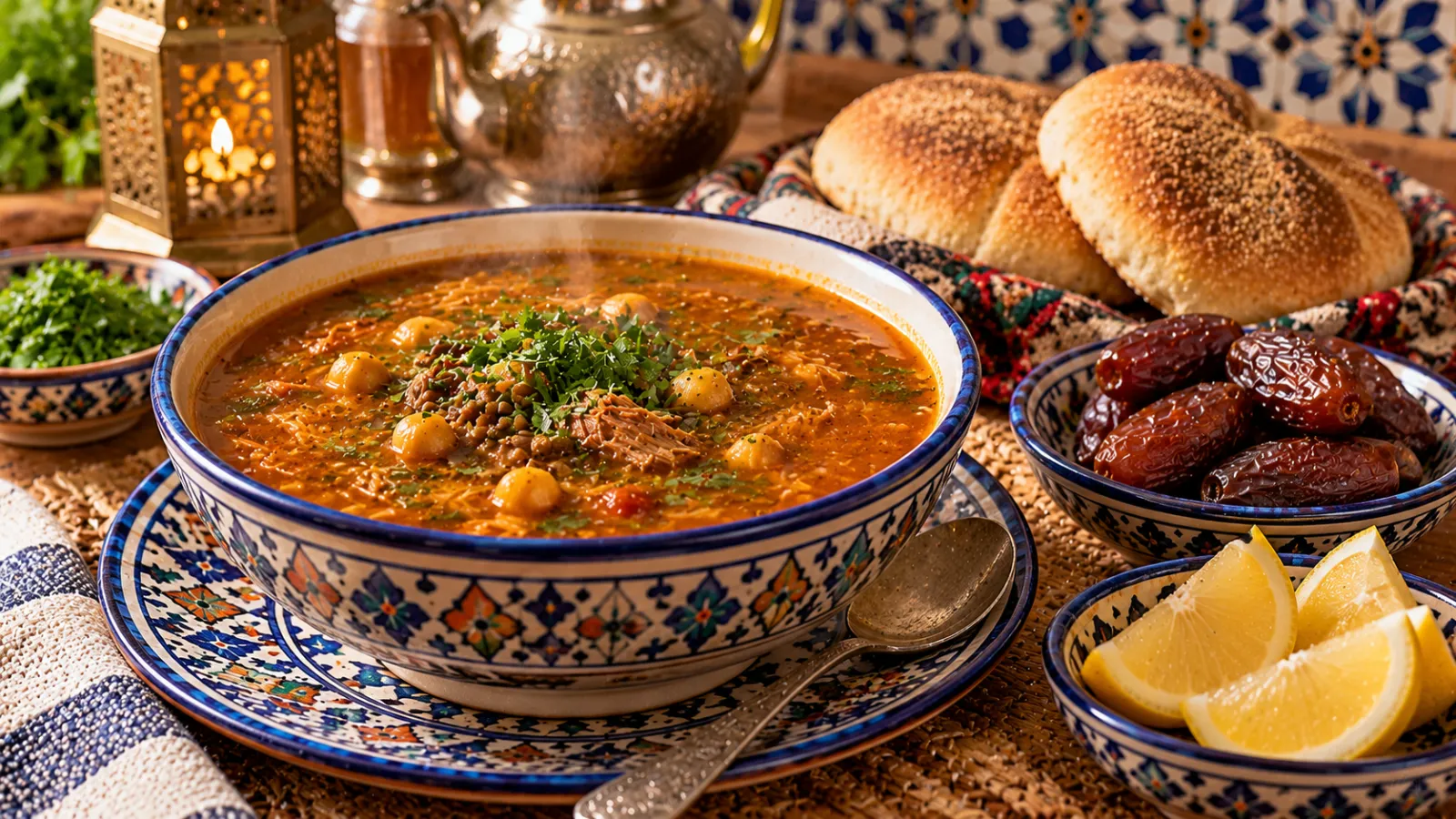
Harira is a thick, warming soup of tomatoes, lentils, chickpeas and fresh herbs, often with small pieces of meat and a final silky thickening that gives it a velvety body. It is one of the best-known dishes of Moroccan home cooking, and many Moroccans associate it strongly with family meals and with Ramadan.
Like most traditional dishes, harira has no single correct recipe. It changes from region to region and from one family kitchen to the next. What follows is an overview of its place at the table, the ingredients that most versions share, and a clear method you can use as a starting point.
Harira's place at the Moroccan table
During Ramadan, when Muslims fast from dawn until sunset, harira is a very common part of the meal that breaks the fast at sunset, often called ftour in Morocco. A bowl of warm, nourishing soup is a gentle and filling way to start eating again after a long day, and in many households a pot is made daily throughout the month.
Harira is far from a Ramadan-only dish, though. It is eaten through the colder months, sold at casual eateries and market stalls in many towns, and served on other occasions too. Recipes are commonly passed down within families, which is why you will hear people defend their own mother's or grandmother's version with real conviction.
Typical harira ingredients
Most versions draw on the same group of ingredients, with the proportions and extras varying by cook.
- Tomatoes: fresh ripe tomatoes, grated or blended, often with some tomato paste for depth.
- Pulses: brown or green lentils and chickpeas. Dried chickpeas are traditionally soaked overnight and often skinned; tinned ones are a fine shortcut.
- Aromatics: onion, celery (usually including the leaves) and sometimes garlic.
- Fresh herbs: generous bunches of flat-leaf parsley and coriander (cilantro), finely chopped.
- Meat (optional): small cubes of lamb or beef, or sometimes chicken. Vegetarian harira is common and very good.
- Spices: ground ginger, black pepper, turmeric and often a little cinnamon, with saffron in some homes.
- Fat: olive oil or butter; some cooks add a spoonful of smen, a preserved, aged butter with a strong flavour.
- Grain: broken vermicelli or a handful of rice, added near the end.
- Tadouira: the thickener that gives harira its body, explained below.
What is tadouira?
Tadouira is a simple batter of flour and water whisked into the simmering soup towards the end of cooking. As it cooks, it turns the broth from thin and brothy to smooth and slightly creamy. Many cooks mix in a little tomato paste for colour, and some prepare the flour-and-water mixture in advance and leave it to rest so that it develops a slight tang; others simply mix it fresh just before using it.
The key is to add it slowly. Pour the batter in a thin stream while stirring constantly, then keep stirring and simmering for several minutes so it thickens evenly and loses any raw flour taste. If you add it too fast or stop stirring, it can form lumps.
How to make harira: a method outline
This outline makes about 8 generous bowls, around 4 quarts (4 litres). Adjust the herbs and spices to your taste.
- Prepare the pulses. Rinse 2/3 cup (about 130 g) of brown or green lentils and pick out any small stones. Soak 2/3 cup (about 130 g) of dried chickpeas overnight and drain, or have one 15 oz (400 g) tin, drained and rinsed, ready to add later.
- Build the base. In a large pot, warm 2 tablespoons olive oil and add 9 oz (250 g) of lamb or beef cut into small cubes (if using), 1 large grated onion, 2 chopped celery stalks with leaves, and half of a large bunch each of chopped parsley and coriander. Add 1 teaspoon ground ginger, 1 teaspoon black pepper, 1/2 teaspoon turmeric, 1/2 teaspoon cinnamon and 1 1/2 teaspoons salt. Stir over medium-low heat for 5 minutes.
- Add tomatoes and pulses. Stir in about 2 lb (900 g) of ripe tomatoes, blended or grated, plus 2 tablespoons tomato paste, the lentils and the soaked chickpeas.
- Simmer. Add about 2 1/2 quarts (2.5 litres) of water. Bring to a boil, then reduce to a gentle simmer, partly covered, for 45 to 60 minutes, until the meat, lentils and chickpeas are tender. Add tinned chickpeas, if using, for the last 15 minutes.
- Add the grain. Stir in 1/3 cup (about 40 g) broken vermicelli or 3 tablespoons rice and simmer for 10 minutes.
- Thicken. Whisk 1/2 cup (60 g) plain flour with 1 1/2 cups (360 ml) cold water until smooth. Pour it slowly into the simmering soup, stirring constantly, then simmer for 8 to 10 minutes more, stirring often, until silky.
- Finish. Stir in the remaining chopped herbs, taste and adjust the salt and pepper, and add a squeeze of lemon if you like.
Some cooks add beaten egg in a thin stream at the very end for extra richness; it sets into soft ribbons.
Serving harira with dates and chebakia
Harira is usually served piping hot in deep bowls, with lemon wedges on the side. During Ramadan it often sits alongside:
- Dates, which are traditionally among the first things eaten when breaking the fast.
- Chebakia, flower-shaped sesame pastries that are fried, soaked in honey and scattered with sesame seeds. The sweet, sticky pastry is a popular contrast to the savoury soup.
- Hard-boiled eggs sprinkled with cumin and salt, bread, and sometimes milk or juice.
Outside Ramadan, a bowl of harira with good bread makes a complete, satisfying meal on its own.
Quick tips
- Do not skimp on herbs. The fresh parsley, coriander and celery leaves are what make harira taste like harira.
- Stir often once thickened. The soup can catch on the bottom of the pot.
- Thin when reheating. Harira thickens as it stands; add a splash of water and reheat until steaming hot throughout.
- Store safely. Cool and refrigerate within 2 hours, and eat within 3 to 4 days, or freeze for up to 3 months.
Harira is a soup that invites you to make it your own once you understand the basics. For more traditional dishes to round out the table, explore our Moroccan and Arabic recipes.
Reader Comments (0)
Have thoughts on this article?
Sign in to leave a comment or share your experience.
No comments yet
Be the first to share your thoughts on this article!